In this lesson, students discover an uncommon career path and see how science, and art history, and craft intersect.
How Art Survives: An Introduction to Conservation
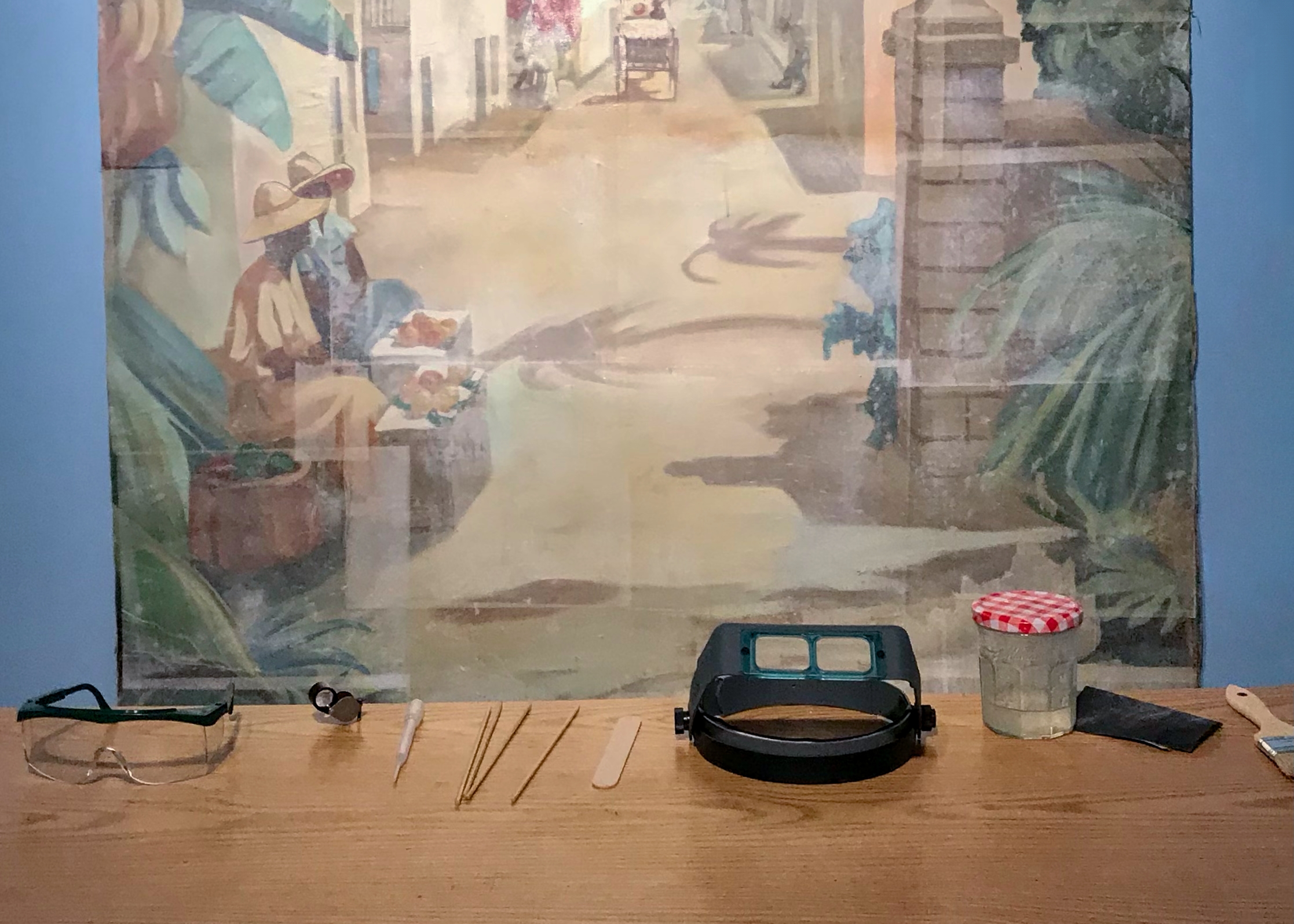
In this lesson, students discover an uncommon career path and see how science, and art history, and craft intersect.

By Blake Fox. Conservation of artworks is a crucial tenet of museums. Richardo Barrett, the curator of the new re-hang of the NAGB’s Permanent Exhibition (PE), “TimeLines: 1950-2007,” has worked in the Bahamian visual arts community for six years. In a speech at the unveiling of the new hanging, he noted the broad range of materials that he has encountered—including art made from sturdy ceramic, over to ephemeral seeds. Barrett further expressed his interest in—and the importance of—the survival of these materials for years to come. The conversation surrounding materials–the impermanent and the enduring–has been crucial in the curation of the recent rehanging of the Permanent Exhibition. The museum is having to ask and answer difficult questions around how we conserve works to ensure that they survive–especially in our tropical, humid climate–for generations to come.

For the National Art Gallery of The Bahamas as well as other art galleries, museums, art collectors and appreciators, one’s storage system is an institution’s most important asset (besides the art of course). Without one, collections of priceless artworks and artefacts will deteriorate at rapid rates. Below are recommendations for the proper handling of works on paper.