All posts tagged: Natalie Willis

The Straw Paradox

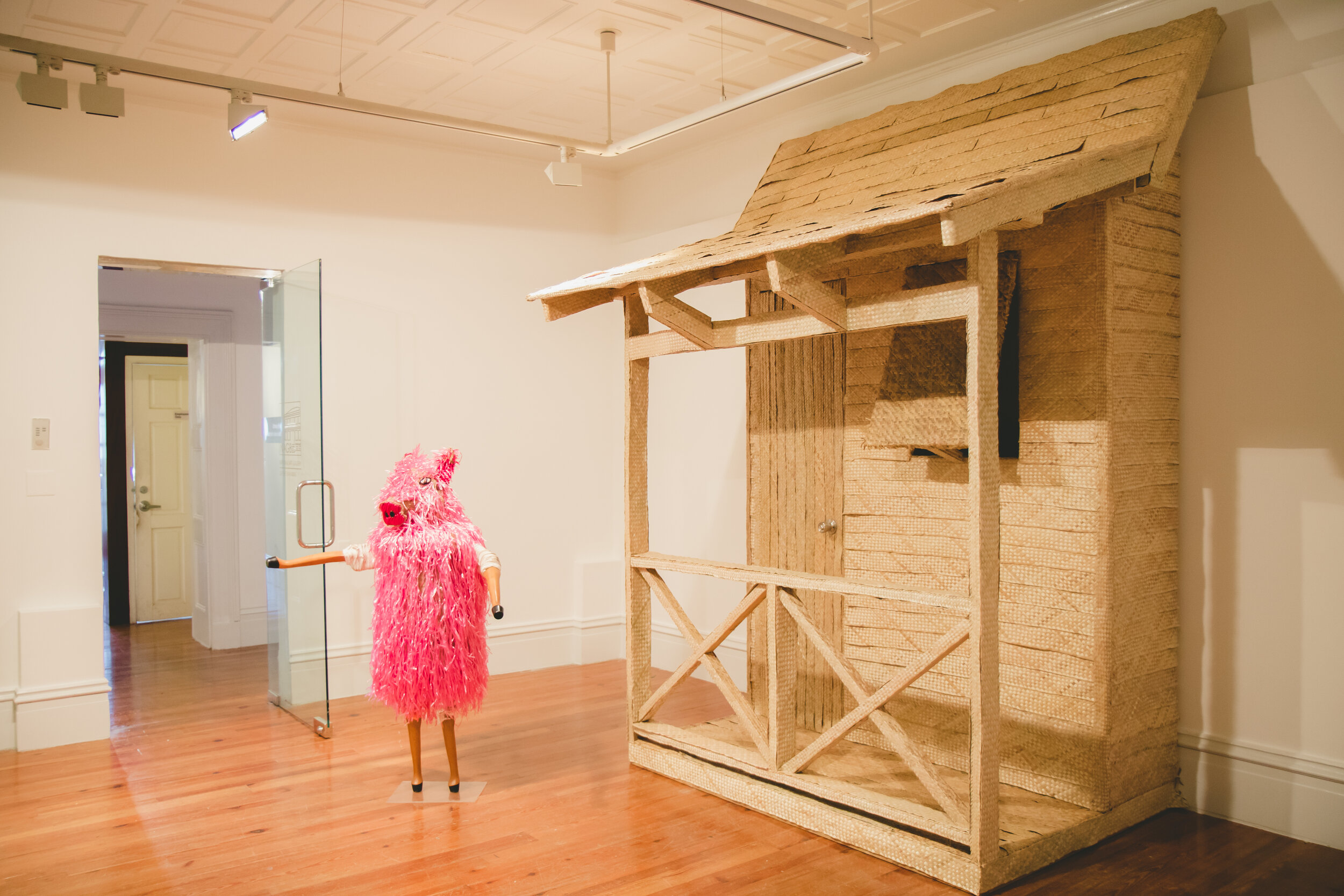
By Natalie Willis. Averia Wright’s “The Straw Paradox: The Pig That Built His House of Straw” is something of a paradox in the name itself. Straw work in The Bahamas is a bit of a misnomer – it isn’t really “straw” in the Western traditional sense at all. Our straw is not made of barley, wheat or things of that ilk at all, rather, it is a pale gold weaving made of Silver Top Palm. Wright comes from a family of straw market women, and has been plaiting her whole life. 

Learn more

Blank Canvas with Richardo Barrett and Natalie Willis

On tonight’s Blank Canvas we look at museum programming from a different perspective–through the eyes of a curator. Guest host NAGB Education Officer Katrina Cartwright is joined by NAGB Assistant Curators Natalie Willis and Richardo Barrett, both of whom have worked closely with the museum’s education department on various initiatives and activities including the Inter-island Traveling Exhibition, mural programme, workshops and tours.

Learn more

Introducing Tilting Axis 2018 Curatorial Fellow, Natalie Willis

For the second year, Tilting Axis has facilitated, administered and designed an open call for our Curatorial Fellowship. In a strong partnership with the University of Texas at Austin Art Galleries at Black Studies we issued an open call to find and seek out a curator living and working in the Caribbean who would rise to the occasion to use the resources, collections and moment at hand to advance their practice in a nuanced and sensitive way. 

Learn more

Care in the Craft: “Young Children” (nd) by Frank Otis Small

By Natalie Willis. We have a long history of looking in The Bahamas, in the idea of being seen. We were the chain of limestone that 40,000 Lucayans and Arawaks saw as home as they weaved their way north through the islands. We were Christopher Columbus’ misplaced Indies, setting his eyes on a lucky second-best that he claimed for Spain – thus beginning the “New World” and our written history. There were the hungry eyes set on plantation profit – and the hungry eyes of those forced to do that work. Then there were the thousands of eyes afterwards, in and out of the space in blinks and in boats that came to see just what “paradise” looked like. Those eyes were turned on us.

Learn more

Other Tongues: An interview with Graham Fagen (Pt I) on Scottish cultural amnesia and gazing into the mouth of silenced histories.

By Natalie Willis

The last in our series of two-part interviews with the artists of “We Suffer To Remain”, this week we speak to Scottish artist Graham Fagen on having his work not only as the starting point of this series of exhibitions on “Difficult Conversations”, but also on having his work brought to the Caribbean context to which it refers. “The Slave’s Lament” (2015) is a moment for us to consider the realities of this Trans-Atlantic history in contemporary contexts, and now that we’ve seen Bahamian responses with our national artists responding to this work, we take a moment to consider Fagen’s perspectives in our space.

Learn more

Beadle, the Mechanic: An Interview with John Beadle on his work for “We Suffer To Remain”, part II

By Natalie Willis.  Last week we heard John Beadle speak to his participation in “We Suffer To Remain”, an exhibition in collaboration with the British Council. The works produced in “We Suffer To Remain”–the Bahamian leg of a 4-part journey of the British Council’s “Difficult Conversations” series of exhibitions– serve as Caribbean response to Scottish artist Graham Fagen’s work, “The Slave’s Lament”. Shown at the Venice Biennale in 2015 as a representation for Scotland in the global art biennial, and choosing to uncover the country’s complicit nature in the Slave trade and the general amnesia surrounding Britain with their role and repercussions in chattel slavery – there is more to this work than meets the eye. Here is a not-so-difficult conversation with Beadle.

Learn more

(Un)Monumental: How Do We Re-contextualise Historic Sculptures for Contemporary Life?

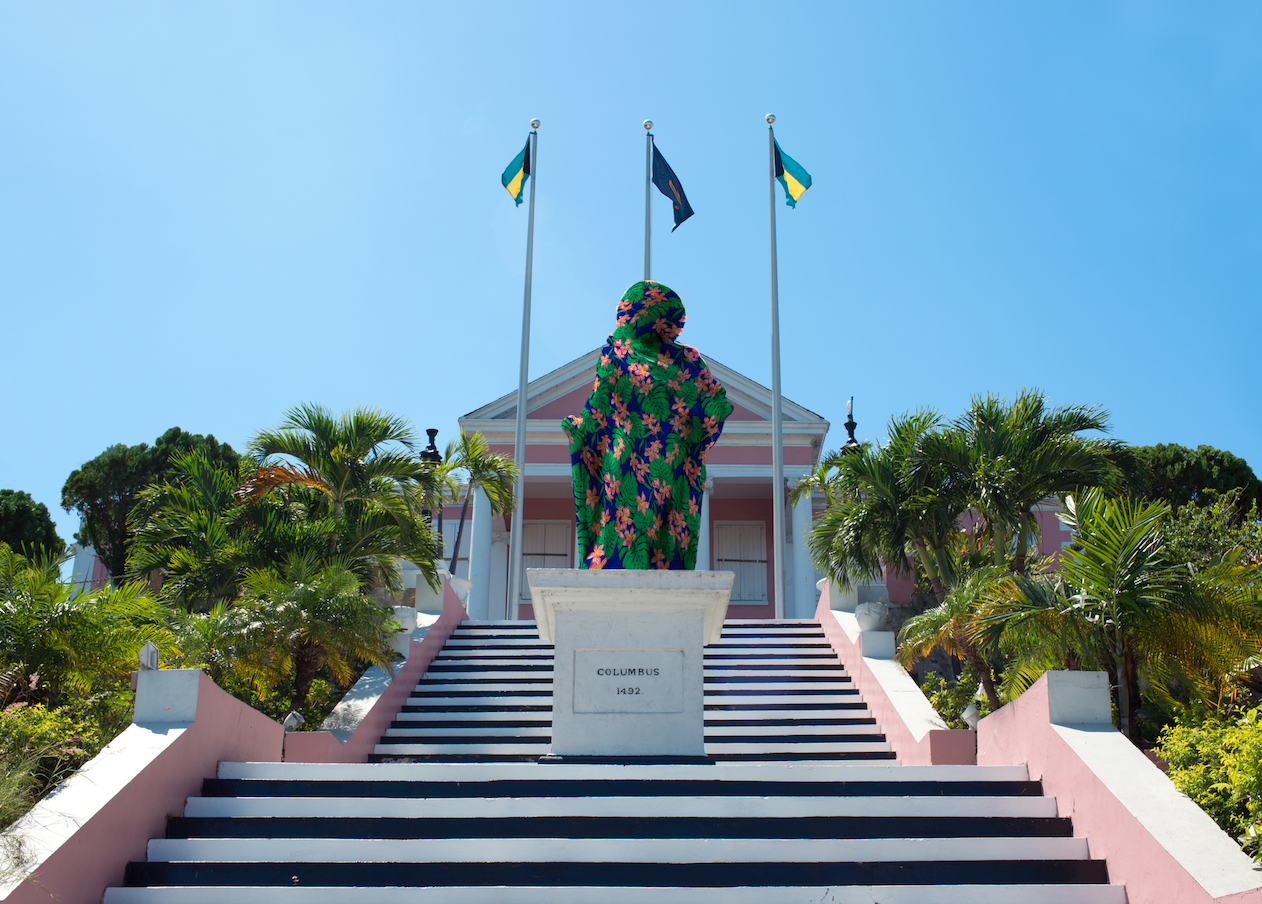
As we have seen in “Re: Encounter” artists can often speak to the idea of the monumental both in size and in content. Dede Brown presents ambiguous humanoid busts, absent and cut out of wood and masonite, which are suspended from the ceiling – perhaps un-monumental in their own way. Playing into this in a different respect, Joiri Minaya presents us with a monumental wall of stretchy fabric that spans the width of the ballroom, but also gives us a series of postcards depicting a proposal for artistic intervention on the Christopher Columbus monument that sits at the front of Government House, making good use of both sides of this double-meaning of the word.

Learn more