Currently browsing: Article

Speaking of Culture: Thinking About Change
By Dr Ian Bethell-Bennett, The University of The Bahamas.  Over the last few weeks we have been journeying through “Medium: Practices and Routes of Spirituality and Mysticism” and discussing linkages with the upcoming show “We Suffer To Remain”, an international collaboration between the British Council and The National Art Gallery of The Bahamas. Writing this piece from Dubai at the Chamber of Commerce conference for Latin America and preparing for Expo2020 the polemics of culture become more clearly abstracted. So much of our culture and life resides beneath the surface. From time to time it surfaces to be revealed in stunning works of art, vibrant crafts, suggestive and politically critical music, or just fried into a fried-dry piece of chicken.  We overlook that we exist in culture and that our culture dictates how we think about who we are and how we respond to a crisis. 

Learn more

Lamenting Slavery: Unearthing Our History through Art

By Dr Ian Bethel Bennett.  The materiality of art and culture is essential to the experience with art and our understanding of the relationship between space, time and humanity.  When we do not see, feel or experience the materiality of space, we tend to ignore its existence.  Art can be used to bridge gaps between the materiality of experience and the historical omissions and erasures that leave the space open to deletion, and de-historicisation.  Music, similar to art, can speak to a similar materialising of experiences that have been wiped out by the passage of time and the shifting sands of spatial economic change.  The disappearance from the mental record of the Nassau Market is a salient example of the vanishing materiality and so the memory of that experience.  What remains is a space that has been razed of the material market and so the only vestiges remain. The artistic renderings and musical recitations of that material experience, where women and men walked over Market Street, often through Gregory’s Arch, to sell produce in the market, is what remains. 

Learn more

“Defender of the Faith”: Rembrandt Taylor’s Dragon-slayer.

By Natalie Willis.   Rembrandt Taylor is truly a master of his craft. His meticulous attention to lines and cell-shaded blocks of colour is testament to his skill. His body of artwork generally contain references to Exodus, to Black kings and queens, to religion, and his beliefs as Rastafari are clear and given deference. The religious and social movement, which began in the 1930s in Jamaica, gives rich territory for explorations of faith and identity, of self, and Taylor doesn’t shy away from re-framing the conversation to suit his roots.

In this vein of celebration of Black histories of faith, “Defender of the Faith” (2001)—depicting St. George slaying the mythical dragon—would seem to be something of a contradiction. Why on Garvey’s green earth would a Rasta paint the patron saint of England in such detail? The image is iconic in art history, and the story is popular not just in England but across Europe – oddly enough, particularly in Russia and Georgia. Saint George, in Georgia, who’d have thunk it?

Learn more

Jace McKinney’s Prayer in a Dark Place

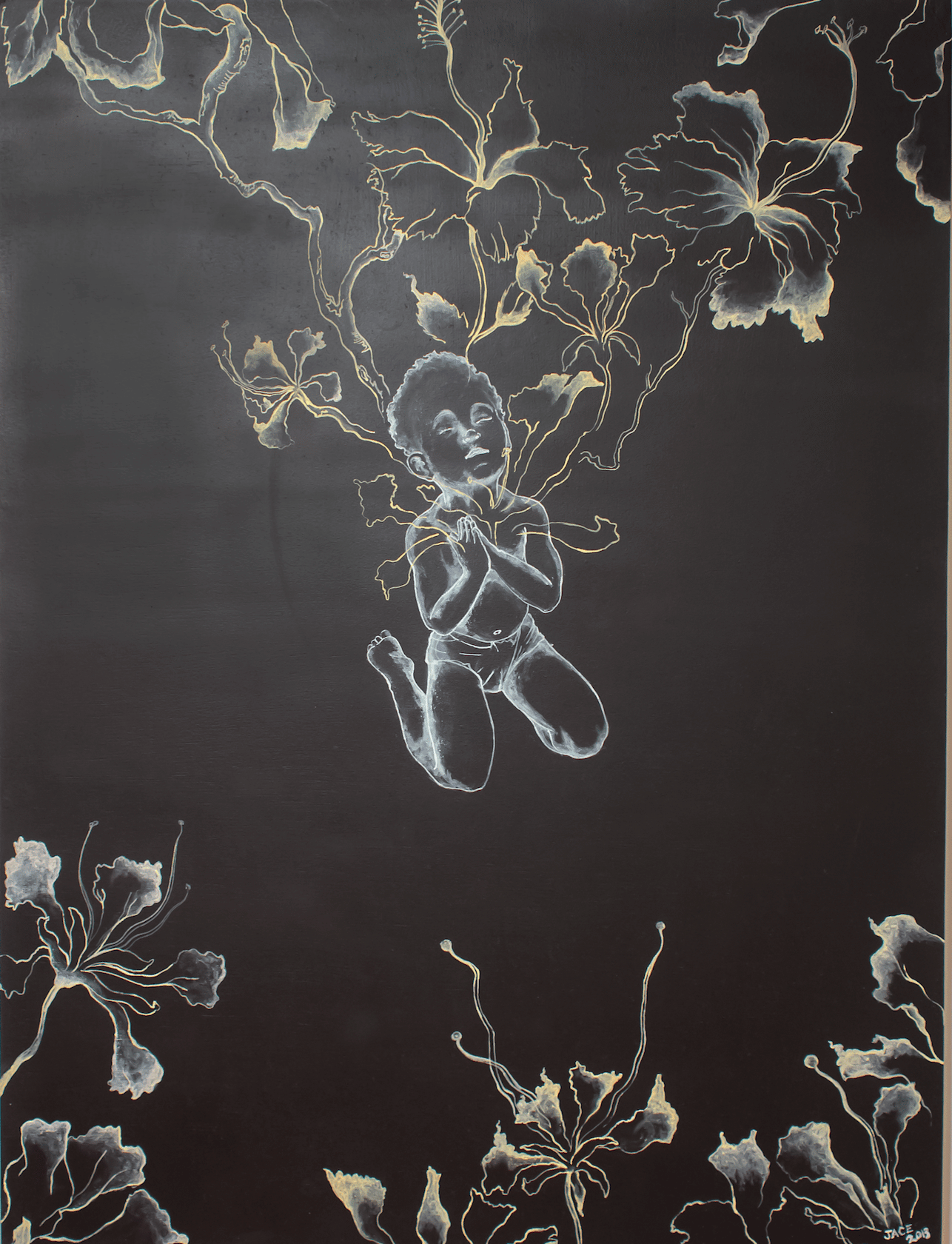
By Natalie Willis.  “Each night before you go to bed, my baby, Whisper a little prayer for me, my baby. Because it’s hard for me, my baby, And the darkest hour is just before dawn.” The Mamas & The Papas crooned about the sort of hope and prayer; the battle of light and dark and hard times that we all encounter, but we are used to hearing things a bit more succinctly in these parts. “I ga pray for you.” It’s something we all hear growing up in this place because regardless of what your personal beliefs might be, someone, somewhere in these 700 isles will be there to pray for you in hard times. Jace McKinney’s “Prayer in a Dark Place” (2013) is a visual representation for many of us of the vulnerability we can be made to feel in life, as we attempt to navigate this very particular space we inhabit. It’s by and large a part of being human for most, but especially for this complicated pocket of the world we live in with our rich and dark history.

Learn more

From the Collection: “Untitled (Balcony House on Market Street)” (ca 1920) by James Osborne “Doc” Sands

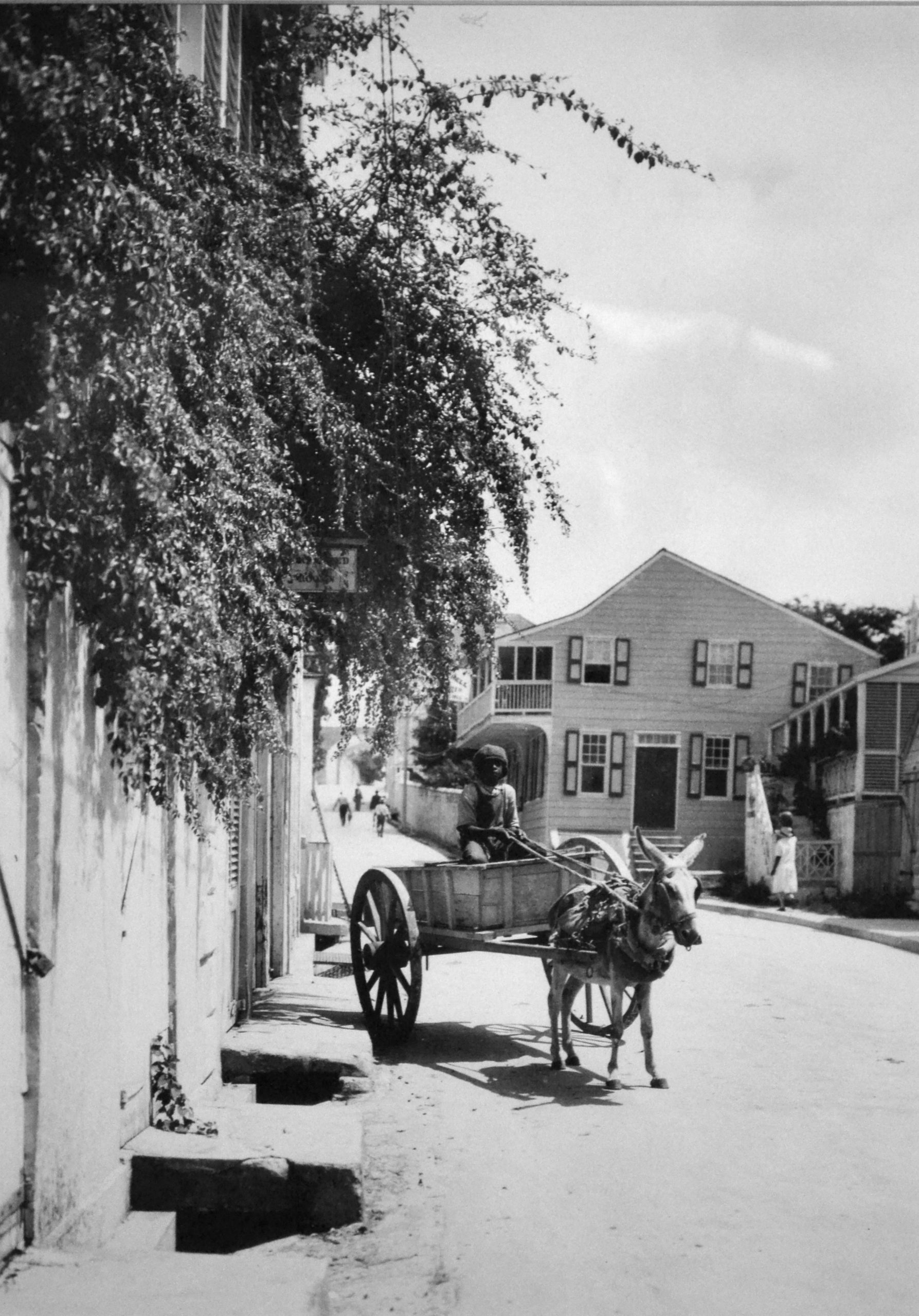
By Natalie Willis.  There is this assumed romanticism of the past for many, especially when looking the quaint images of Nassau-from-yesteryear. But here, we find it is often laced with a pain of looking at where we were as a nation, those issues we faced then and the echoes of this past that we deal with now. “Untitled (Balcony House on Market Street)” (ca. 1920) by James Osborne “Doc” Sands shows us a Bahamas that is still reeling and reconfiguring after the abolishment of slavery, and post-apprenticeship, even in 1920. The legacy of racial power structures inherited by The Bahamas, and by the wider Caribbean region, was very much present and felt. The tiering of whites, mixed-race, and Black Bahamians is still something we feel today, even with all the work done to dismantle this hegemony.

Learn more

This has all been said before: Art, Racism and the words of representation

By Dr Ian Bethell-Bennett.I borrow words from Haitian writer and activist Edwidge Danticat to start this piece “Nou Led, Nou La,” “We are ugly but we are here,” to express the sentiment against the “shithole countries” that have been accused for their suffering by powers that created it. And here we find ourselves again, in the ugliness of a non-racist, historical depiction of people and countries, even while some may be continents, that have been set a light by a history of gun-boat and dollar diplomacy, and representation that shows them to be nothing other than shithole countries with monkeys in the jungle. 

Learn more

Gaia Reimagined: “Mother Earth” (1992) by Clive Stuart

By Natalie Willis.  Clive Stuart’s “Mother Earth” (1992; acrylic on plywood) is a serene and unapologetic celebration of both womanhood and Blackness. Born on Cat Island, Stuart imbues “Mother Earth” with the spirituality, magic, and mysticism of his birthplace. With an unapologetic Black woman standing front and centre as subject, the work celebrates just that – Black womanhood and all that it comes with.

Learn more

“That Vodou that who do?”: Ancestry, heritage, memory, and light in the work of Eric Jean-Louis.

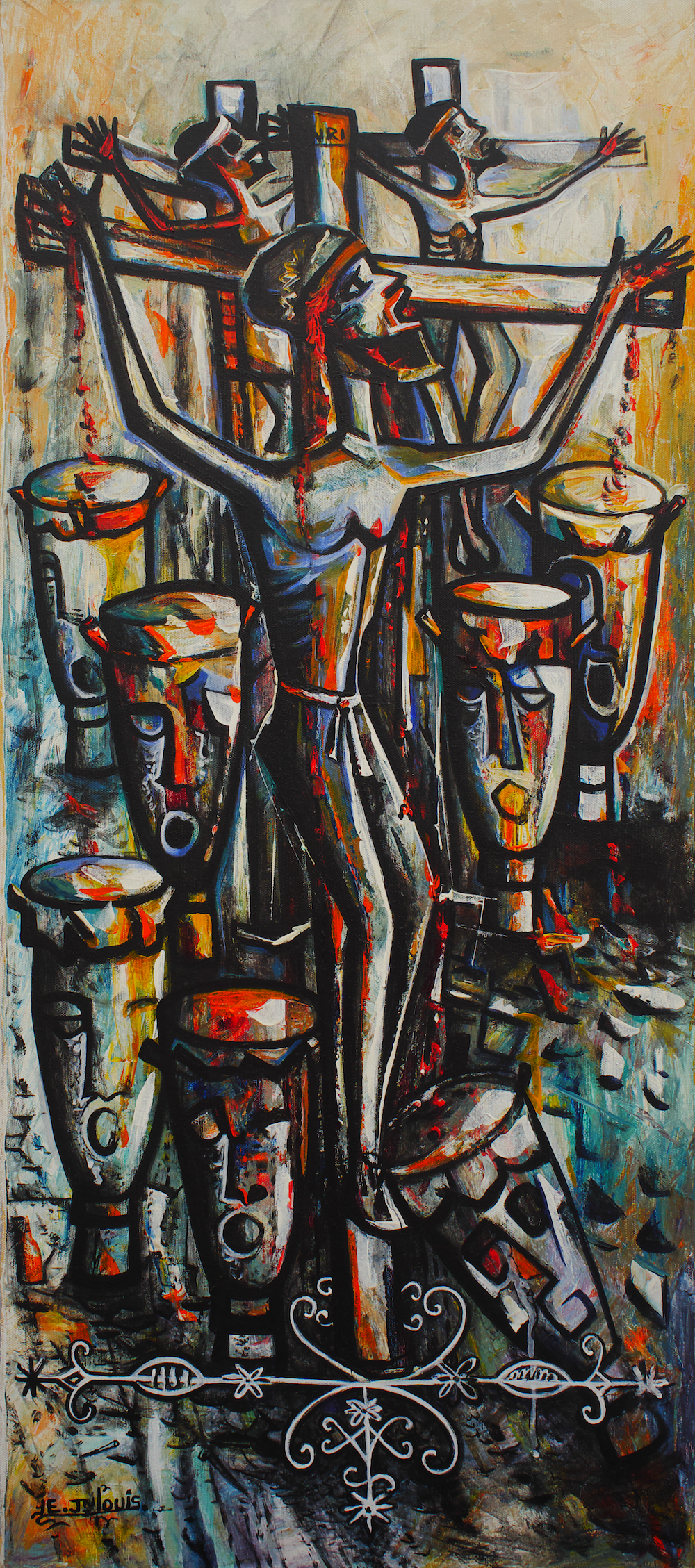
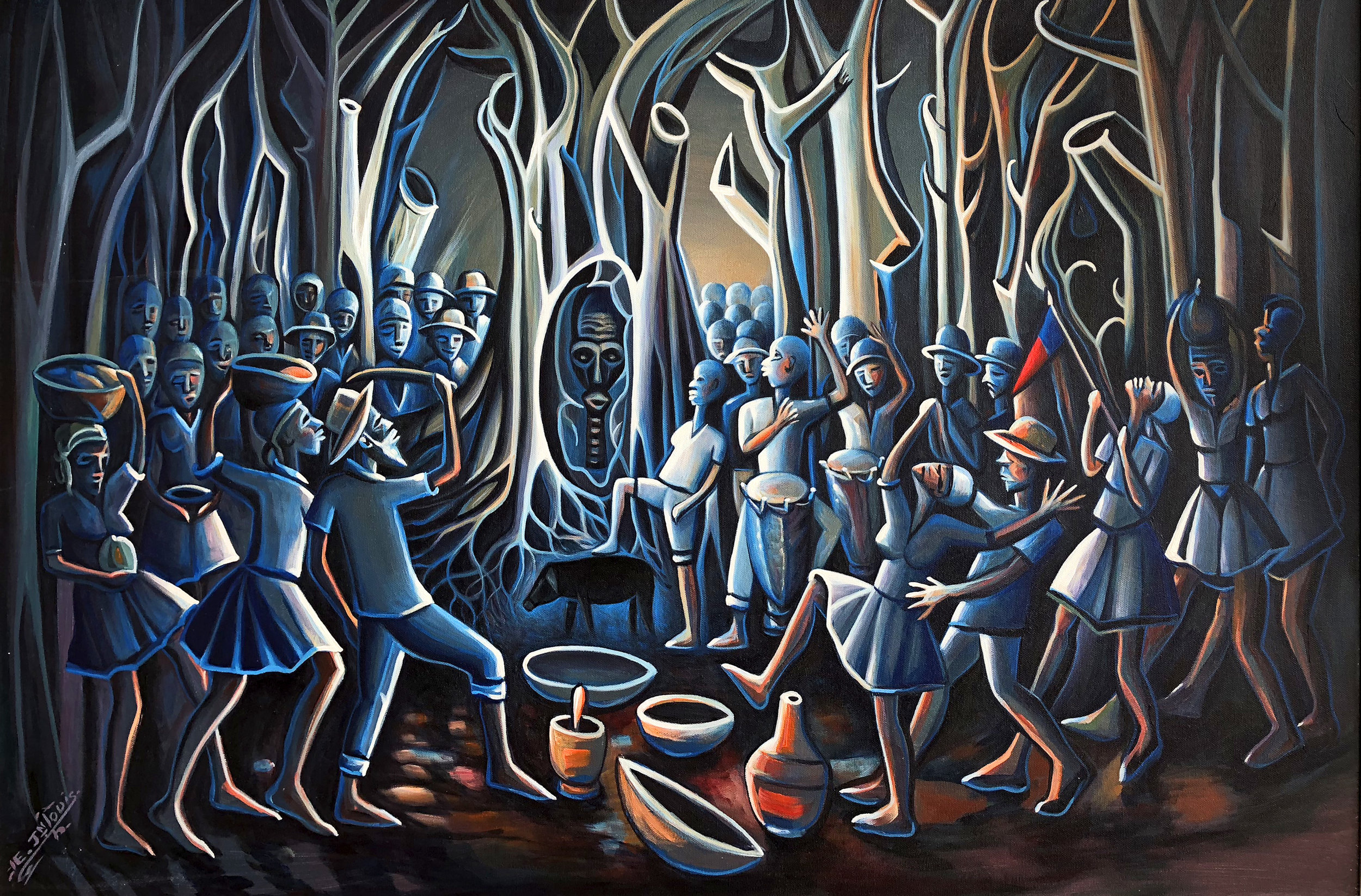
By Natalie Willis.  Eric Jean-Louis (b. 1957) is an artist hailing from Haiti, well-known and much loved and it is easy to see why. His work is filled with the human and natural balance of light and dark,  the duality we all struggle with and that we see in the world and in ourselves. Visually, his work packs a graphic punch with his style of shading blocks of dark and adding bright stripes and slivers of light – and they are really a stunning sight to behold. To those who find themselves cringing and shying away from the word Voodoo, as in the title of this piece “Ceremonie de Bois Cayman: The Voodoo Still Lives” (2007) by Jean-Louis, it would remiss to deny and write off this practice of art and spirituality. There is light to be found in this form of spirituality, which is so often, and erroneously, deemed ‘dark magic’. As the current exhibition, “Medium: Practices and Routes of Spirituality and Mysticism” seeks to uncover the complexities of religious and spiritual practice in the region, so does this painting lay plain the crossovers and awkwardness of our relationship as Caribbean peoples to our African heritage.

Learn more

Majority Rule: A Snapshot of Our Identity

By Dr Ian Bethell-Bennett.  The Bahamas, according to the discourse, is a Black country.  Majority Rule was established in 1967 and, since then, the language of nationalism has been extremely narrow, exclusive and definitive.  Before the power of the majority was inculcated into the halls of Parliament, the language was very different, and usually overlooked the Black population, except as inferior subordinates.  However, the face of The Bahamas, while changing, has changed little when seen through messages deployed through art.  Yes, art has evolved and developed.  The understanding that the Majority are people too, after the end of slavery and the permitting of souls into Black folk was not as earth shattering as one might have expected.  The artistic document, though, speaks of differences and similarities of seeing and unseeing that depends little on one’s majority or minority status, but rather on the depth and wealth of one’s artistic practice.  Many artists chose to include the more comprehensive and complete vision and voice of The Bahamas. Some chose to ignore or exclude.  The nationalist discourse chose to do the latter.

Learn more

The Power of Imprisonment through language: The Eye for the Tropics and Majority Rule in The Bahamas

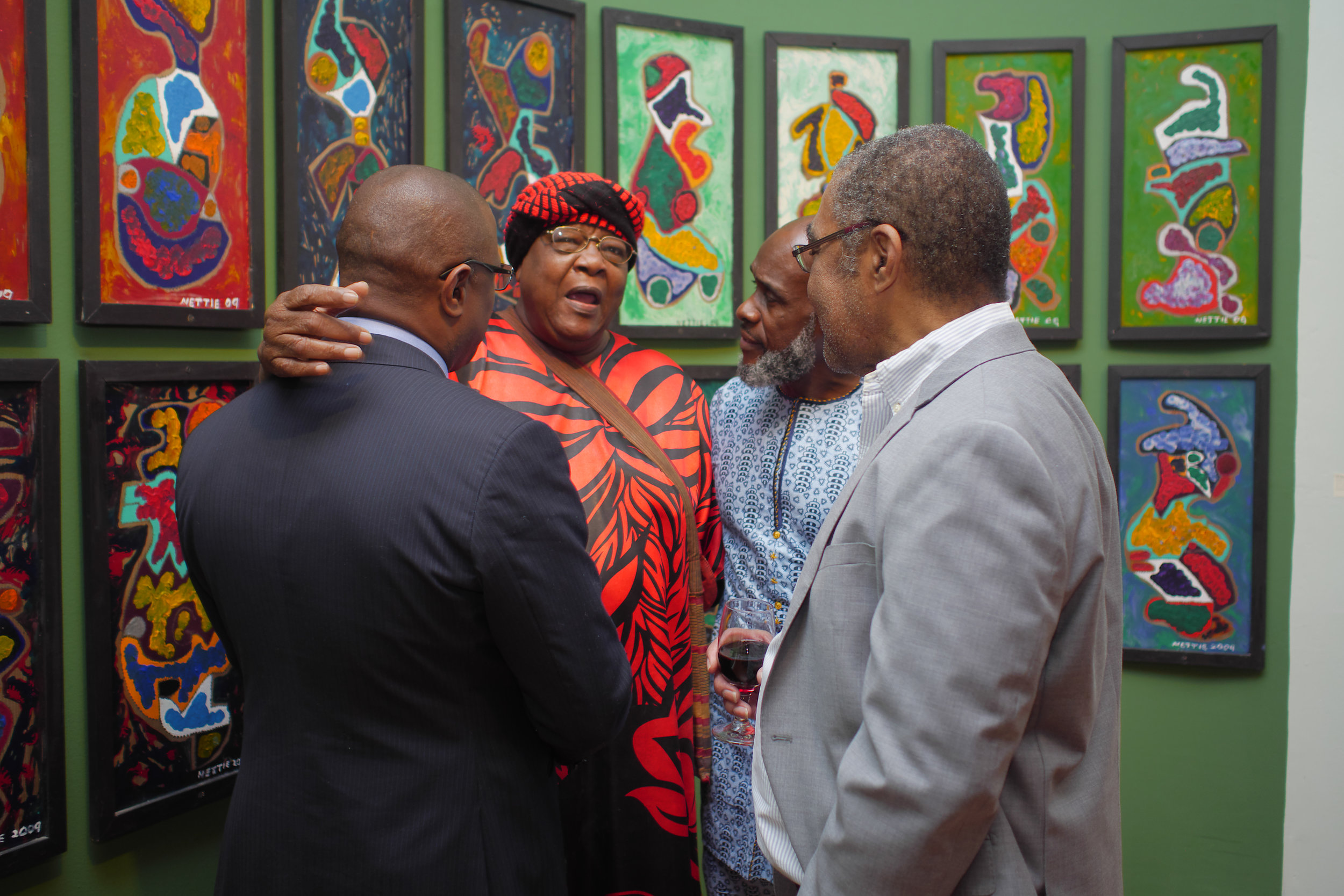
By Dr Ian Bethell Bennett.  “We believe that rape is a private matter and that women are inherently unequal.” As 2017 passed into memory this last week, it seems important to think about how we see ourselves in the future.  Spirituality could play a large part in this vision, or we could simply choose to continue along what seems to be a road paved with consumerist joy. The paradise myth is part and parcel of that consumerism: where beaches and bodies of paradise that we need to survive can be bought, sold, bartered, negotiated away and given to other sovereign states for their own devices. The opening of “Medium: Practices and Route of Spirituality and Mysticism” at the National Art Gallery of The Bahamas (NAGB) on December 14, 2017 presented a moment for reflection, but also for a new focus.  When we can celebrate Bahamian ‘masters’ Tony McKay aka “Exuma” or “The Obeah Man,” Amos Ferguson, Wellington Bridgewater and Netica “Nettie” Symonette, along with a boat-load–used intentionally–of other artists, we are saying that perhaps we are changing the way we see ourselves. 

Learn more