Currently browsing: Article

Talking to the Dead: Tamika Galanis Brings Lomax Archive Materials Home

By Natalie Willis

“There are years that ask questions and years that answer.” ― Zora Neale Hurston, Their Eyes Were Watching God 

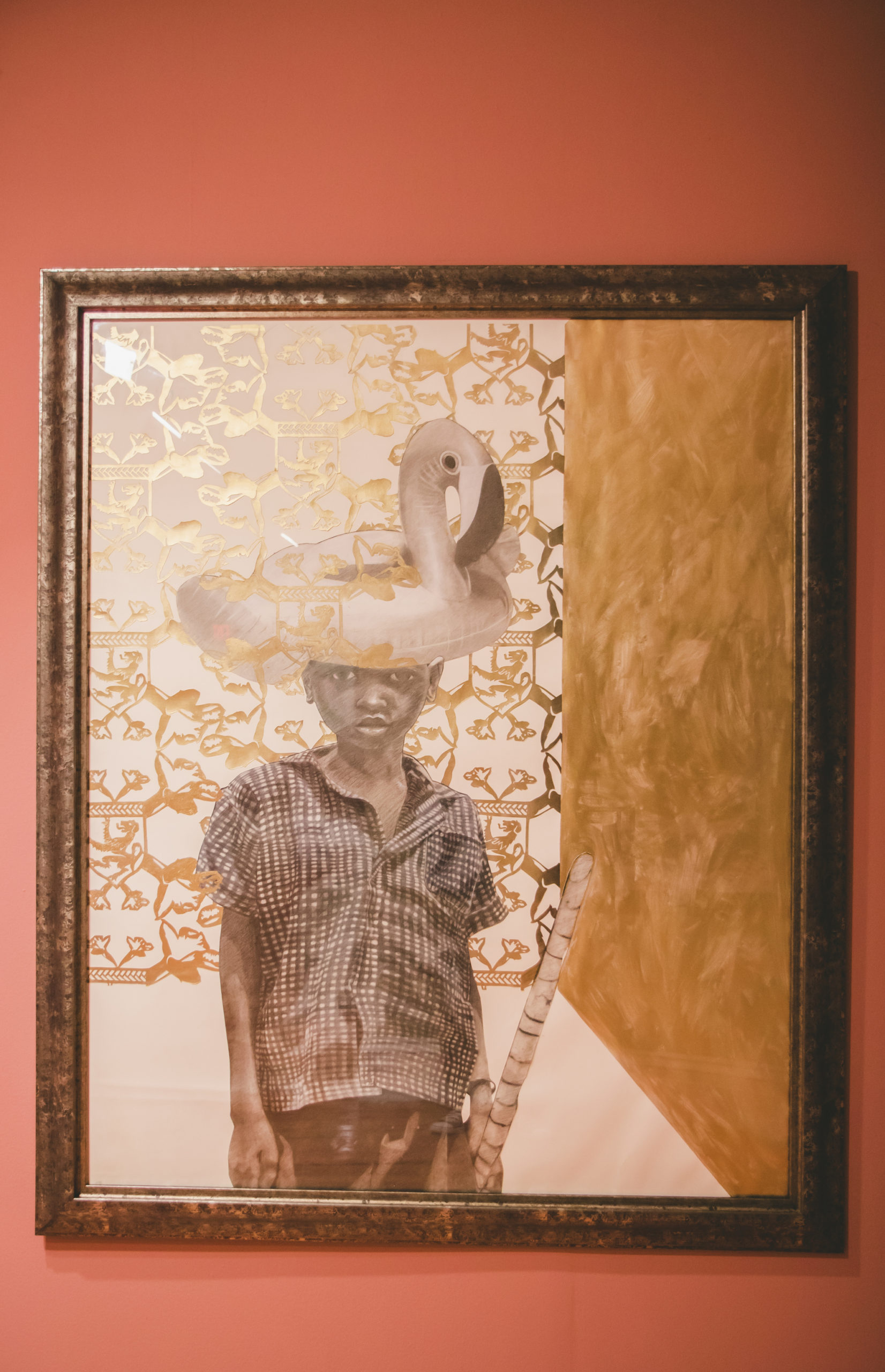
“Homecoming: Talking to the Dead” by Tamika Galanis becomes an answer to a much older question. Galanis’ work, in her careful, tender sifting-through of the Alan Lomax archive (consisting of a host of images and sound from his expedition to The Bahamas in 1935) at the Library of Congress became a response to Lomax’s curious call and questioning nearly 100 years ago. A Library of Congress Fellow, Galanis may be best known to some as “the lady with the shirts” – those Lignum + Tingum tees that serve up Bahamian dialect and lists of local flora and food – but for others she is far, far more – an artist, researcher, documentarian, and a seeker of truth. Coming across materials from this collection while she was undertaking her graduate studies, Galanis saw a letter from Lomax reporting his findings from his time in Nassau back to the Library of Congress (LOC), the start of her time following this thread that would lead her to a surprising connection to Zora Neale Hurston.

Learn more

The God Self: Lessons on Self-Love from Emerging Artist Cydne Coleby

By Kevanté A.C. Cash, NAGB Correspondent. At first glance, through a narrow lens, one could be offended by the works of emerging artist Cydne Coleby supported in the National Exhibition 9 (NE9) “The Fruit and The Seed. Crafted with a “slight sense of narcissism”, interwoven with themes of erotic imagery, Coleby addresses the self – the God self, that is. She conducts a session of “soulversations” – moments in time allotted for self to do the work of loving and healing from past traumas and pains through her series “A God Called Self”.  

Learn more

Tender Seedlings: Anina and A.L. Major Reflect on Pain and Love in the Bahamian Diaspora

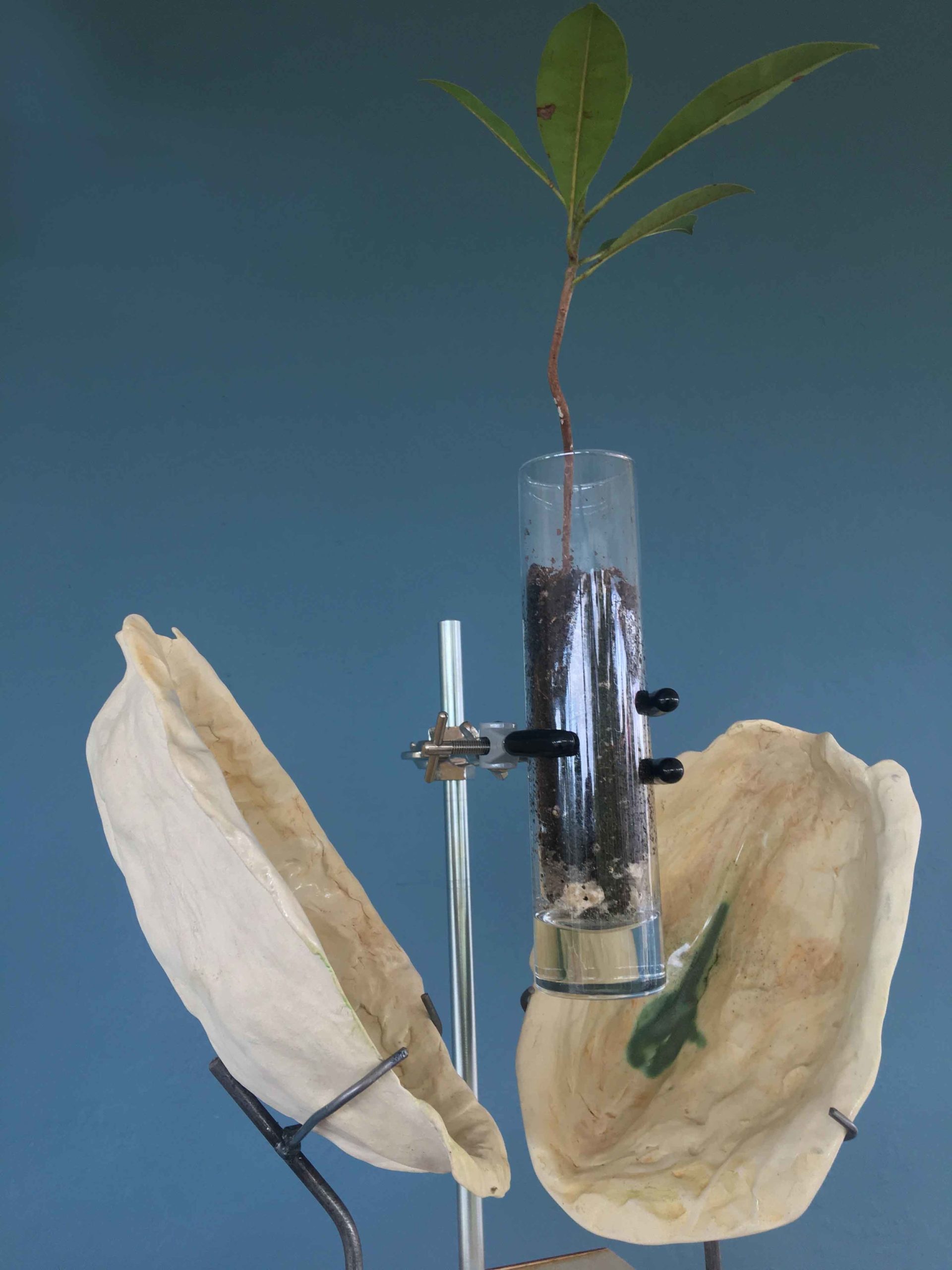
By Natalie Willis. Art and language, be it in literature, poetry, or song, have perhaps always gone hand in hand. It makes sense of course, because really what we’re getting down to in artwork or in words is communication – often with one being used to describe or illustrate the other. It’s a happy collaboration, and so too was the collaboration between interdisciplinary artist Anina Major and her flesh-and-blood family A.L. Major. The two came together to produce Seedling (2018) for the NE9 “The Fruit and The Seed,” a work incorporating cohesively all manner of material – ceramic, wood, digital clocks, a newly sprouted dilly tree, and the words of poetry and phone calls overland and oversea. The work – part artistic laboratory experiment and part poetic becoming – gives us a way to think on the struggles of identity of the Bahamian emigre.

Learn more

A Botanical of Grief: Yasmin Glinton and Charlotte Henay Connect with Ancestors’ Voices and Put Mother Tongue to Poetry

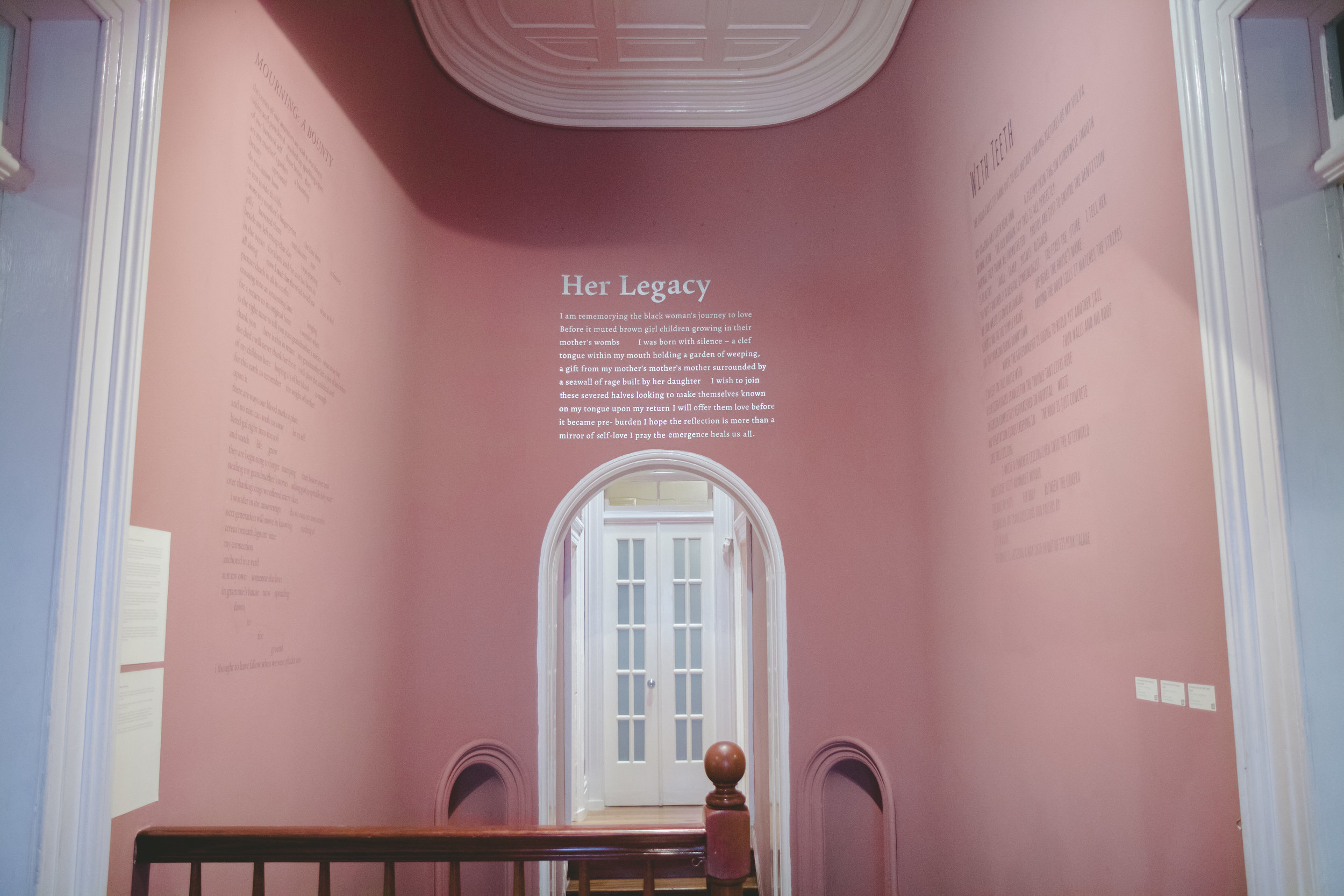
By Natalie Willis. In much of cultural studies, the Caribbean region has been discussed as a place where people feel an uneasy, tense tie to landscape due to our history of people being displaced here. Paradise or purgatory, whether these islands were viewed as restorative or a place of exile – and truthfully, we have had both stories ring true throughout time, it’s all in the branding. Tourist narratives aside, this space is a difficult one to feel truly close to, the landscape feels at once that it is ours and that it is without of our reach given the fact we are all “from elsewhere”, as Stuart Hall (the late Jamaican scholar and father of cultural studies) stated. Poetry in visual art can also be a difficult fit – is it language? Is it visual? Is it both? Problematising our ties to the land and the neat boxes that traditionalists might wish to shove the vast world of poetry into, are the unapologetic works of Yasmin Glinton and Charlotte Henay. “A Botanical of Grief” (2018), displayed in subtle silver script bearing powerful words of great weight, exists between – like so many of us in the Caribbean. The work is between voices: of the authors, of their ancestors, of poet and of artist, but it also exists in a liminal space physically as it spans the high walls of the stairwell of the 1860’s old bones that make up the Villa Doyle. Stairs are between places, and so are we as children of the Caribbean. We are between Africa and Europe, between India and China, we come from Arawaks, Tainos and Caribs with difficult access to those mother tongues – and most importantly, we are an amalgam of any and all combinations of these continents.

Learn more