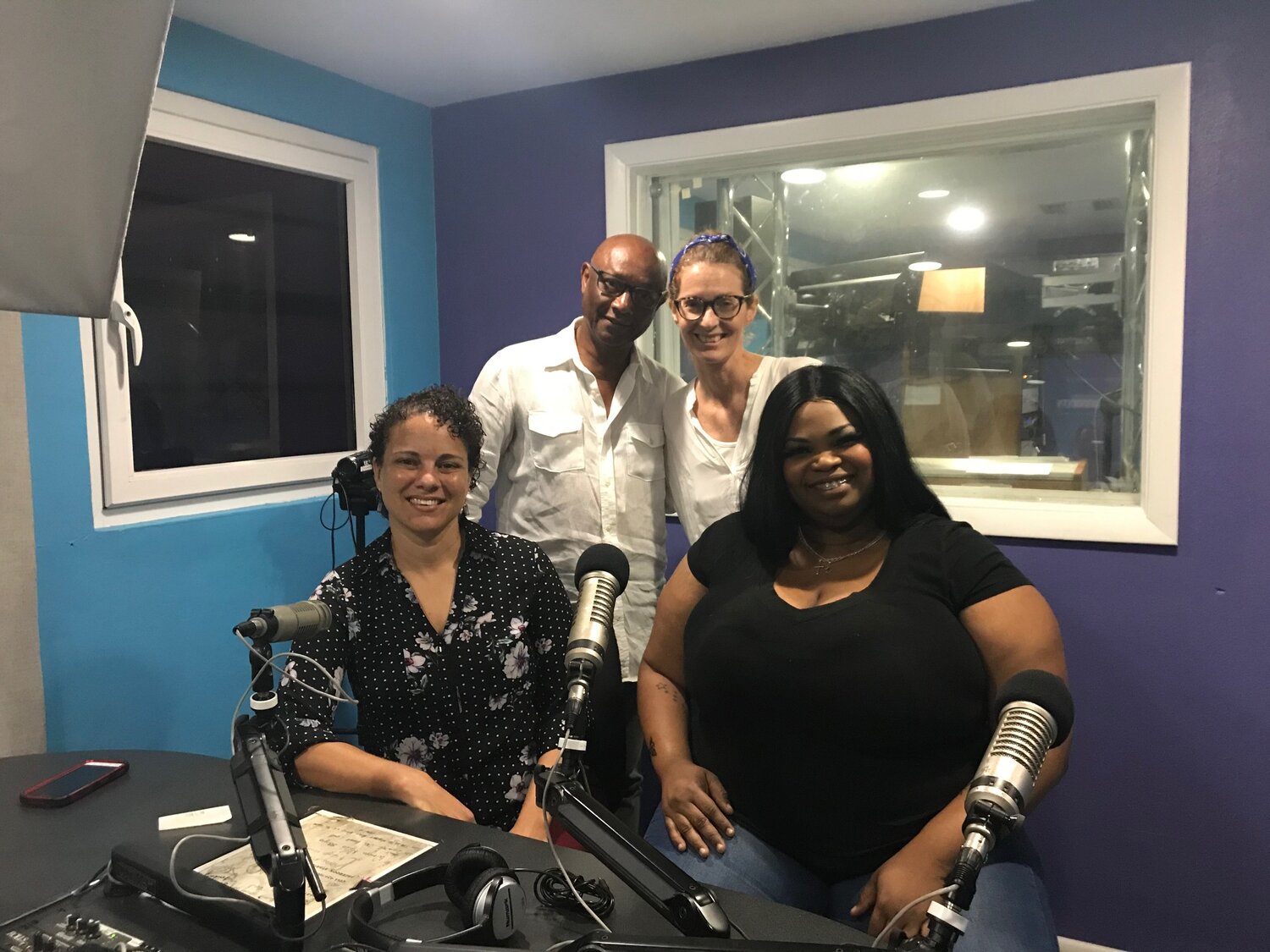
The “Blank Canvas” Studio is graced tonight by the great Stan Burnside who joins the NAGB Executive Director, Amanda Coulson, in the studio to talk about his life journey in the arts.
NAGB Assistant Curator, Natalie Willis, sits in for Executive Director, Amanda Coulson, on tonight’s episode of Blank Canvas. This week, Willis speaks with artists who creatively contribute to relief efforts in Grand Bahama. She is joined by Chantal Bethel, a long-time fixture and advocate in the Grand Bahama art community, who has an exhibition and book launch that starts this Thursday at Hillside House.
To Throw Rocks, curated by Matthew Rahming, is an exploration of wider Black masculinities. In unpacking the tropes around Black masculine identities in The Bahamas, through a survey of practices ranging from the 70s to now, this selection puts particular focus on love, sex and sexuality, tenderness, labor and violence. The exhibition features work by Rashad Adderley, John Beadle, Justin Benjamin, Tyesha Brooks, Blake Fox, Amaani Hepburn, Allan Jones and Rashad Leamount, Jodi Minnis, Heino Schmid, Jarette Stubbs and Bradley Wood. In an effort to widen the scope of voices present, artwork from the National Collection, The Collection of the University of the Bahamas and the Brenton Story Collection have been drawn from to round out the conversation in its fullness. These voices come together to acknowledge the powers and privileges (or lack thereof) at play, to face the vulnerability, to bring awareness to responsibility, and to address conflicts around what it means to exist as a man, particularly a black man, in The Bahamas. To Throw Rocks opens on Thursday, November 21st at 5:30pm in the Franklin Wilson Graduate Centre on the University of the Bahamas’ Oaksfield Campus as a part of in conjunction with the 8th annual Critical Caribbean Symposium Series. The exhibition will run until December 2019. For more information, please feel free to contact Matthew Rahming at mr.matthew.rahming@hotmail.com
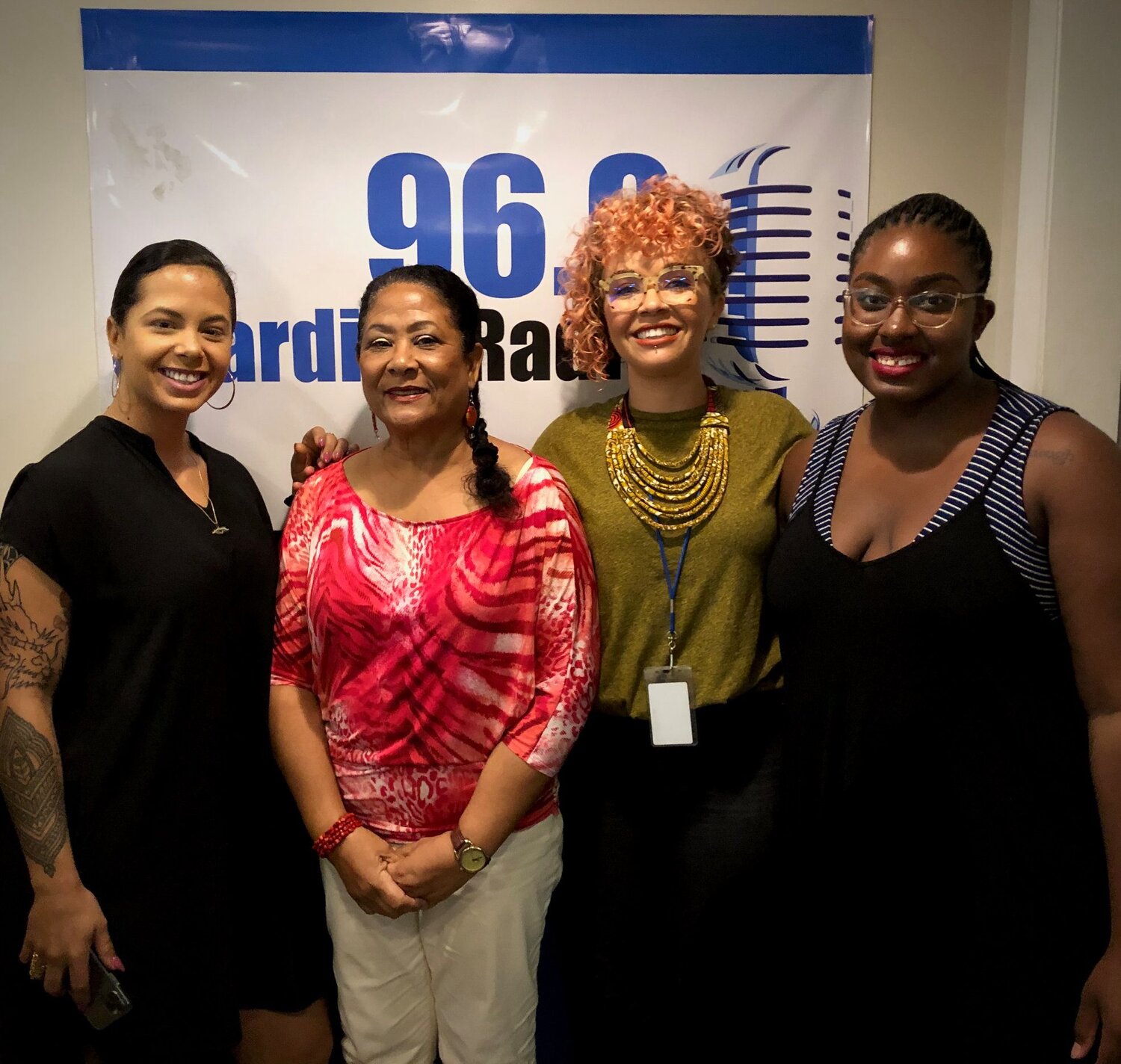
Tonight’s “Blank Canvas” is all about the Central Bank of The Bahamas’ commitment time the arts.
On this tonight’s Blank Canvas, Amanda is joined in the studio by Bahamian artist, Kendra Frorup, a professor of Art & Design at the University of Tampa. Kendra’s focus is on the global conversation about connections and identity with a special interest in the Caribbean and Africa. She has exhibited her sculptures in the United States and in worldwide venues such as the Caribbean, France, Puerto Rico and Martinique, Ghetto Biennale, Haiti, UNESCO in Andorra, and The National Art Gallery of The Bahamas.
On this week’s show, Deime Ubani comes to speak about her own artistic practice (she currently has work at the Central Bank of The Bahamas’ Open category exhibitors) and also the importance of community and collectives working for the benefit of the people. She shares about different artist groups that she is a part of—including the SALUS Project and the Artist’s Circle—and her next group project “Black Out: Art in The Dark” at the Creative Center on the PopopStudio grounds.
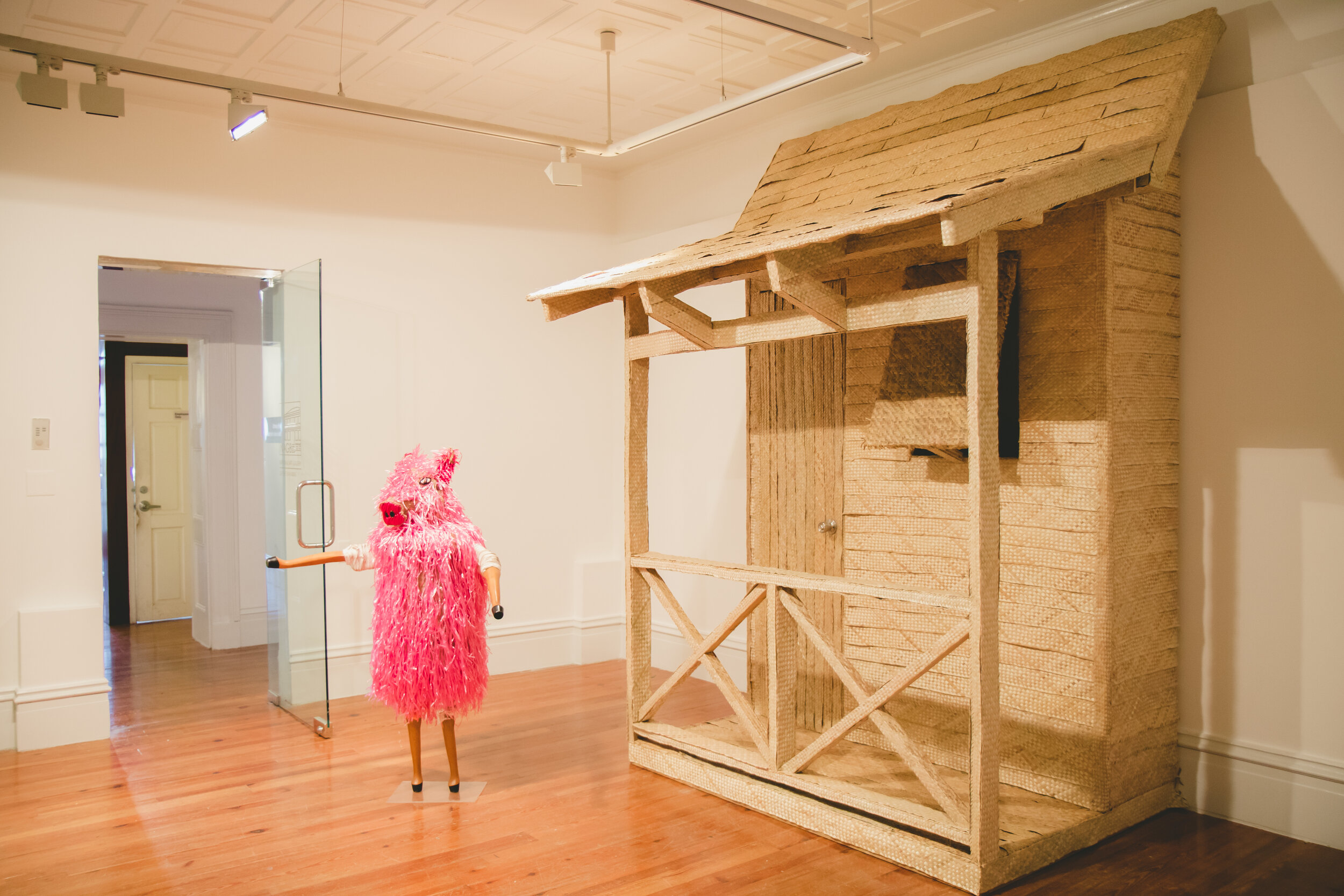
By Natalie Willis. Averia Wright’s “The Straw Paradox: The Pig That Built His House of Straw” is something of a paradox in the name itself. Straw work in The Bahamas is a bit of a misnomer – it isn’t really “straw” in the Western traditional sense at all. Our straw is not made of barley, wheat or things of that ilk at all, rather, it is a pale gold weaving made of Silver Top Palm. Wright comes from a family of straw market women, and has been plaiting her whole life.
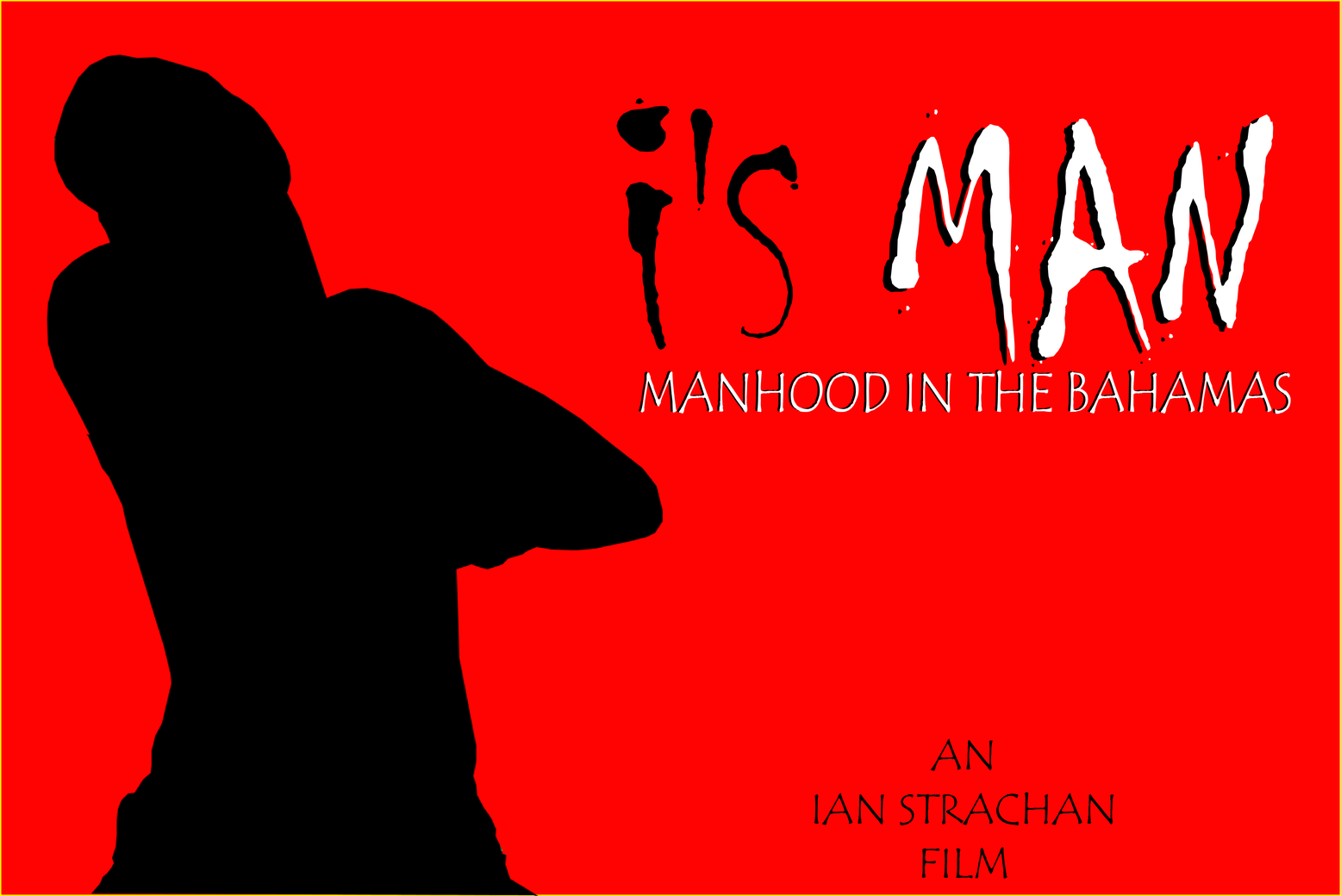
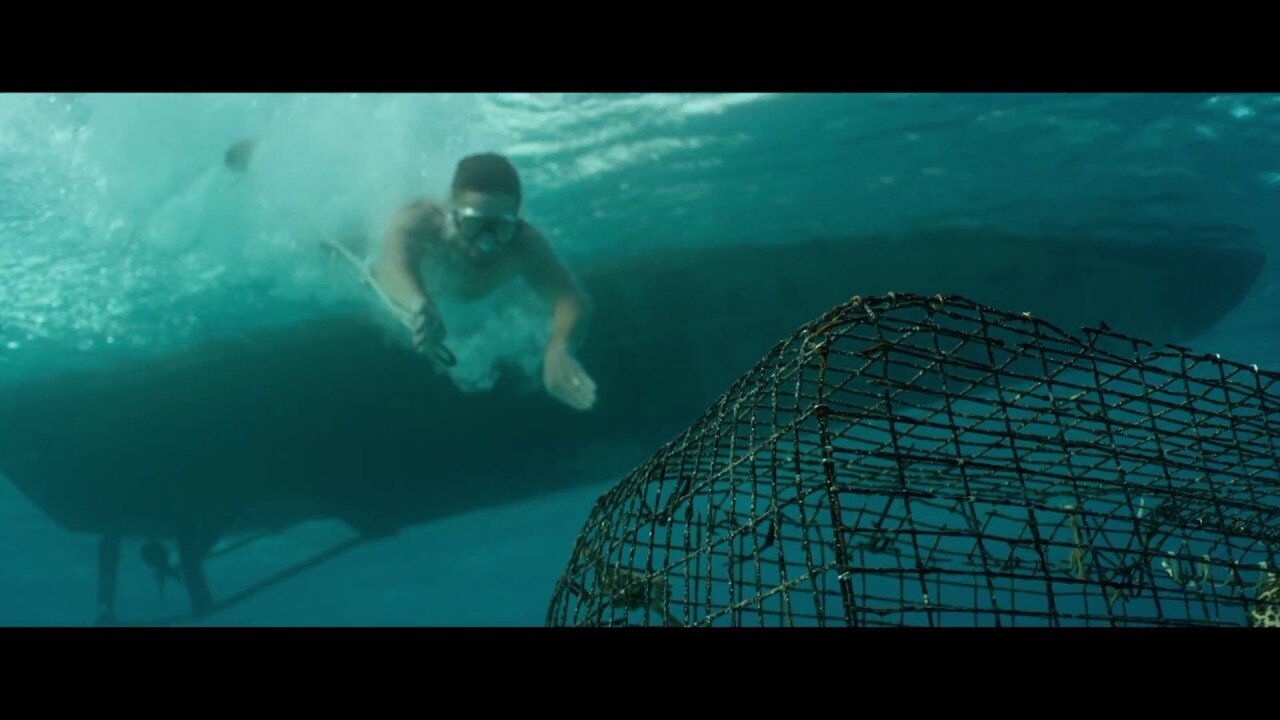
By Dr Ian Bethell-Bennett, University of The Bahamas. English Social Sciences organised a screening and panel discussion of the film I’s Man at the University of The Bahamas on Wednesday, November 6th, at 6:00 p.m. The room was packed as students and faculty from sociology, psychology, English and the general public came out to discuss the current ‘man crisis’. The film captures perspectives from multiple angles that discuss the imagery of black masculinity and its descriptors from objectifying women in batty riders to murder for glory because of ego issues: the intersections of sexuality and socio-cultural and economic pressures conflate to conform to roles society perceives as normal and in turn normalises. If men do not consume women like that, something must be wrong with them. Much is documented in the film of the ways black masculinities are defined and controlled by a capitalistic, hegemonic racialised system that seeks to disempower through weaponised messaging and stereotyping. Meanwhile, the documentary reveals this underside.
By Dr. Ian Bethell-Bennett, The University of The Bahamas. It is the Visual Life of Social Affliction that speaks out against silence imposed over death. Undocumented death. If one lives an undocumented life, does one die an undocumented death?
The sea as life
One is buoyed on by levity, not dropped like a lead weight to the bottom of the sea, where there are souls that link from Africa to the New World and back again. These disembodied figures, souls linking lands, the submarine link, or submerged mother of Edward Brathwaite’s creation bind us together. They travel up from Haiti through the Ragged Island passage to northern shores. This is life suspended in a watery elixir of death and blue green beauty: the irony of nature.
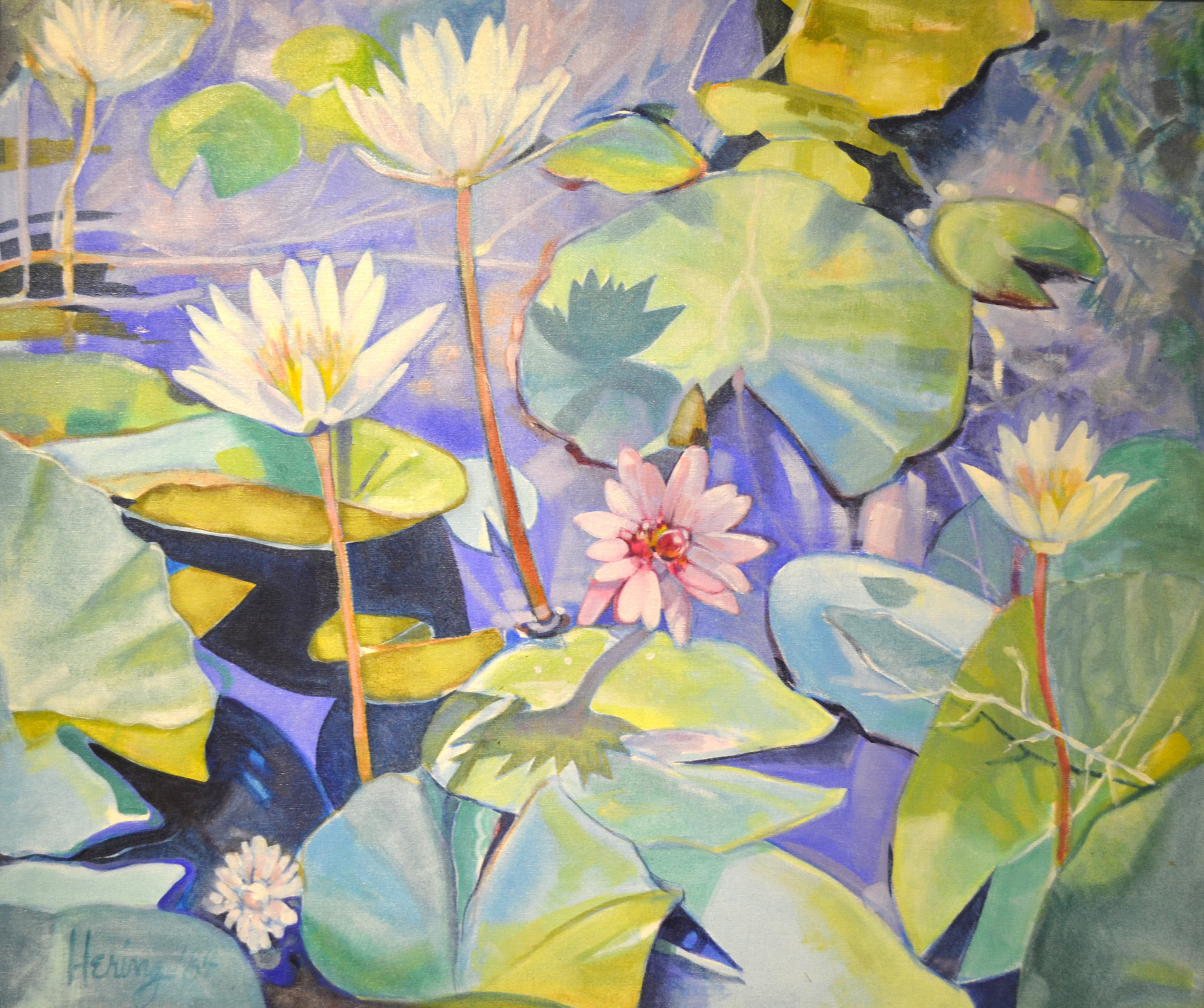
Peggy Hering’s “Lilies” (1984) invites reflection on movement and permanence in the Caribbean. This rare piece from the Dawn Davies Collection offers a glimpse into the life of an artist whose story is woven into Nassau’s past.